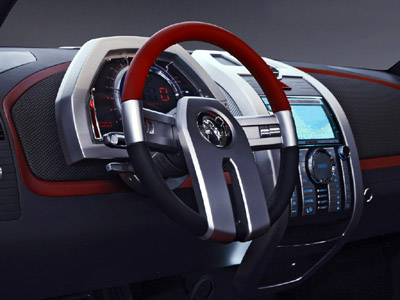
The Dodge Caravan is a family minivan manufactured by Chrysler Group LLC and sold under its Dodge brand. Along with its nameplate variant, the Plymouth Voyager, the Caravan was introduced for the 1984 model year. In 1987, the Dodge Grand Caravan long-wheelbase (LWB) model was introduced and sold alongside the short-wheelbase (SWB) Caravan. The SWB model was discontinued after the 2007 model year; and, since the 2008 model year, the van has been sold only under the Grand Caravan nameplate. Other nameplate variants of the Caravan include the Chrysler Voyager (1988–present), the upmarket Chrysler Town & Country (1990–present), and the Volkswagen Routan (2008–present). Chrysler manufactures and markets its minivan series worldwide. Together with its nameplate variants, the Chrysler minivans have ranked as the 13th best-selling automotive nameplate worldwide. Generation I Caravans used the Chrysler S platform, which was closely related to the K-cars, Dodge Aries and Plymouth Reliant. There were three trim levels on the Generation I Caravan: base, mainstream SE, and upscale LE. The Caravan was on Car and Driver magazine's Ten Best list for 1985. All trim levels were also available in a slightly longer body, called the Grand Caravan, which allowed significantly more cargo space behind the rear seat. Most of the interior trim, controls, and instrumentation were borrowed from the K-car, leading to a very "car-like" interior look and feel. Coupled with the lower floor that the front wheel drive design allowed, this helped to make the Caravan seem more like a large station wagon than a van, enticing many buyers who would not have otherwise been comfortable driving a van.
Long Term Dodge Grand Caravan - Kelley Blue Book Van Culture

From 1991 through 1995, the Caravan used the Chrysler AS platform; they were the last minivans derived from the Chrysler K platform.Changes for this generation included revised trim for 1992, including roof-racks and doorhandles, among other components (prior to this, said components were largely like those found on the previous generation). 1993 marked the final year for optional woodgrain and wire wheels on higher level models. 1994 saw a redesigned interior, with slightly different seat contours/fabrics, along with a new dash, in order to accommodate a passenger-side air bag. 1994 also saw exterior trim changes, such as a body colored grill and moldings on certain models, as well as the addition of a one year only "10th Anniversary Edition" model. Available as an option on a mid-level Caravan and Grand Caravan (also offered on Voyager models as well), the popular "10th Anniversary" package featured 2-tone paint schemes, which included a contrasting light gray colored lower break, along with a gold fender badge. Only select colors were available on this model.With Generation III, the Chrysler minivans were available in long- and short– wheelbase models; three- and four-door configurations; and eight different powertrains, including electric and compressed natural gas; on a single, flexible platform.The redesigned Dodge Caravan and Chrysler Town&Country were released in August 2000. The release was part of a promotional tie-in with Nabisco, which unveiled their new "Mini Oreos" inside the van during the unveiling. The first vans rolled off the line at the Windsor Assembly Plant on July 24.

Beginning with Generation V in model year 2008, Chrysler only made the long wheelbase Grand Caravan. This van debuted at the 2007 North American International Auto Show and had exterior styling by Ralph Gilles.A new six-speed automatic transmission became standard with the 3.8 L V6 and the new 4.0 L V6. The four-speed automatic transmission is standard with the 3.3 L Flex-Fuel V6. Major changes were made for the 2011 model year, both in styling and functionality. The suspension was heavily re-tuned, with both Dodge and Chrysler minivans gaining a larger front sway bar and new rear sway bar, increased rear roll center height, adjusted spring rates, a new steering gear, a revised front static camber setting, and lowered ride height. All three of the former engine choices were replaced by the new Pentastar 3.6-liter V6 with six-speed automatic transmission, now the sole powertrain choice for all models. Interior trim was restyled on both vans, in addition to major exterior revisions highlighted by the new "double-crosshair" grille on the Grand Caravan and a new chrome grille for the Town & Country. Other changes included extra sound insulation, acoustic glass, new seats, softer-touch surfaces, new LED ambient lighting and center console,and halogen projector headlamps with LED accents. The Chrysler models were adjusted so that instead of competing against equivalent Dodge trim levels, they were above Dodge in trim and features. Both the 3.8 L and 4.0 L engines were paired with Chrysler's 62TE 6 speed automatic transmission with variable line pressure (VLP) technology (See Ultradrive#62TE). In Canada (2008–2010) the 3.3 L was the standard engine across the range, combined with the 4-speed 41TE automatic transmission. The 4.0 L engine and six speed combination was available as an option on only the top of the range SXT models. In 2011 the six speed transmission was specified as standard on the Town & Country.


 Expressive Dodge Magnum SRT8 On The Road
 Executive White Dodge Magnum SRT8
 Dodge Magnum SRT8 Engine
 Dodge Magnum SRT8 Modification
 Sporty Dodge Magnum SRT8
 Dodge Magnum SRT8 Steering Wheels
 Dodge Magnum SRT8 Interior
 Impressive Dodge Magnum SRT8